
The Warrior Who Taught Us Lupus Doesn’t Discriminate
His Scars Built a Brotherhood of Men Unafraid to Be Heard
Emmitt | San Diego, CA | Born April 1970
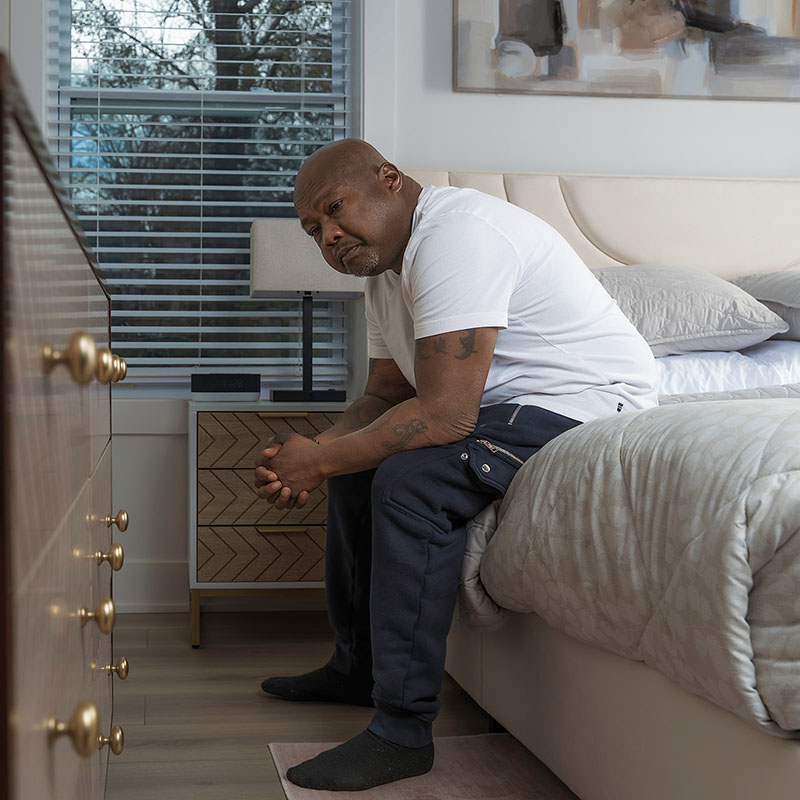
Broad-shouldered, impeccably dressed, with a smile that spreads slowly across his face, Emmitt pulls people toward him without effort. When he walks into a room, the energy shifts and his quiet steadiness puts you instantly at ease.
To the naked eye, Emmitt’s illness is invisible. His story of hardship and resilience isn’t written in the way he clothes or carries himself. But it’s emblazoned across his body – an atlas of survival traced in scars, rerouted veins and the physical evidence of a disease that nearly took everything from him.
Since childhood, Emmitt pushed through unexplained medical symptoms: rashes spreading across his skin, fevers without cause, joint pain so deep it seemed to settle into his bones. Countless visits to physicians and hospitals yielded precious little in the way of answers. So, he did what many men do: He worked harder, longer hours, forcing himself to push through the pain.
Over time, even Emmitt began to question himself. “If the hospitals are telling me nothing is wrong, then there’s nothing wrong, right?” he recalls.
Emmitt silently endured until, one day, severe lower back pain sent him to the hospital once again. But this visit would be different – the moment that changed everything.
Doctors told Emmitt he had stage 3 kidney disease caused by systemic lupus – a potentially fatal, chronic inflammatory autoimmune disease that had gone undiagnosed and untreated for years.
Yet, even with a diagnosis in hand, the truth still didn’t fully land. The pamphlets he was given described lupus as a woman’s disease, filled with illustrations of women’s bodies and stories that had no room for him. The faces in the brochures didn’t look like Emmitt, and the language made it seem like men weren’t part of the conversation.
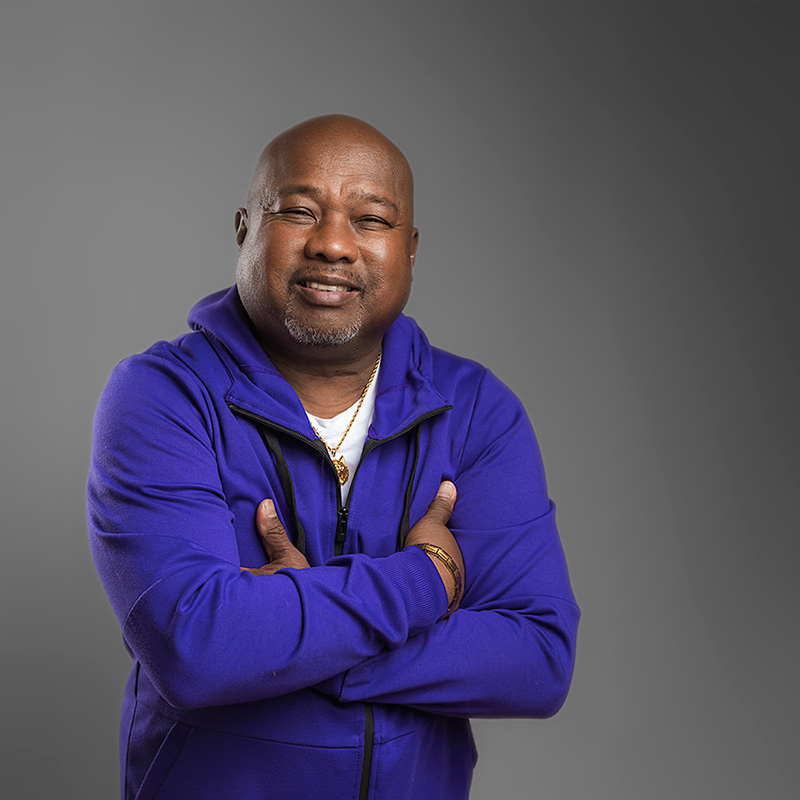
Out of late-night conversations and virtual meetings, Male Lupus Warriors was born. It’s a space where men living with lupus can speak freely about their experiences without shame or isolation. What began as a small Zoom chat quickly grew into a brotherhood—a place where men could show up honestly; share their fears, fatigue and frustration; and be understood. “I turned my pain into power,” Emmitt says.
Emmitt did what many people do when the world tells them their truth doesn’t exist:
He dismissed the symptoms, quietly slipped into denial and tucked the diagnosis away. He poured himself into work, providing for his family and raising his children. His biracial Filipino upbringing echoed loudly: You’re a man. Show strength.
He lived each day attempting to push lupus to the back burner, but the disease continued attacking his kidneys and other organs, slowly tightening its grip. Then, in 2019, everything changed. A lupus-related brain condition abruptly ended his career as an automotive service manager that had anchored his identity. In a single moment, the life he had built collapsed. The role that had defined him—provider, professional, the man who kept everything moving—was taken from him.
For the first time, Emmitt was forced to ask himself a question many people with chronic illness eventually face: Who am I when the life I built disappears? That question broke something open inside him. “There was no male support group, no male person I knew that I could talk to. There was nothing like that at all,” he shares.
Confronted with societal silence, Emmitt made a decision that would change the trajectory of his story. “I tried to give back what was not there for me.” He began speaking honestly about what he was going through, first with colleagues, then with the broader community.
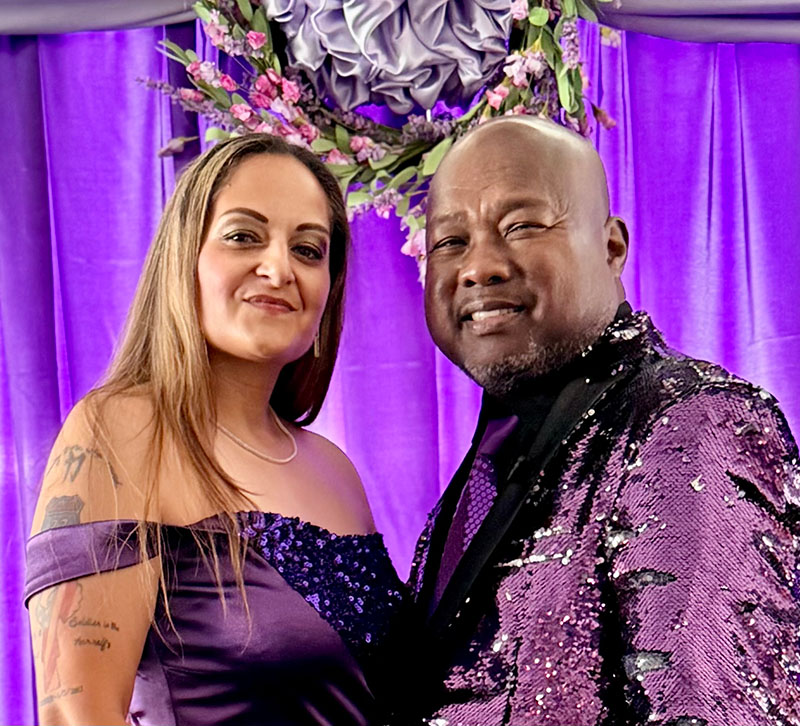
Friends affectionately call Emmitt and Shanell the “lupus power couple.” In a life shaped by medical uncertainty, their partnership has become its own kind of medicine as the fight has intensified for Emmitt.
What started as a therapeutic confessional turned into something unexpected: People listened, especially men. “I didn’t even realize I had a story to tell until I started telling it,” Emmitt says.
The response revealed something powerful: While men make up about 10 percent of lupus diagnoses, few speak openly about it. Many suffer quietly, unsure where they fit in a conversation long framed around women. Emmitt had lived that silence.
Out of late-night conversations and virtual meetings, Male Lupus Warriors was born. It’s a space where men living with lupus can speak freely about their experiences without shame or isolation. What began as a small Zoom chat quickly grew into a brotherhood—a place where men could show up honestly; share their fears, fatigue and frustration; and be understood.
“I turned my pain into power,” Emmitt says.
His advocacy soon connected him more deeply with the lupus community and, ultimately, led him to one of the most meaningful relationships of his life. He met Shanell, his fiancé, who also lives with lupus.
Together, friends affectionately call them the “lupus power couple,” two people who understand the unpredictable terrain of this disease and walk it side by side. In a life shaped by medical uncertainty, their partnership has become its own kind of medicine as the fight has intensified for Emmitt.
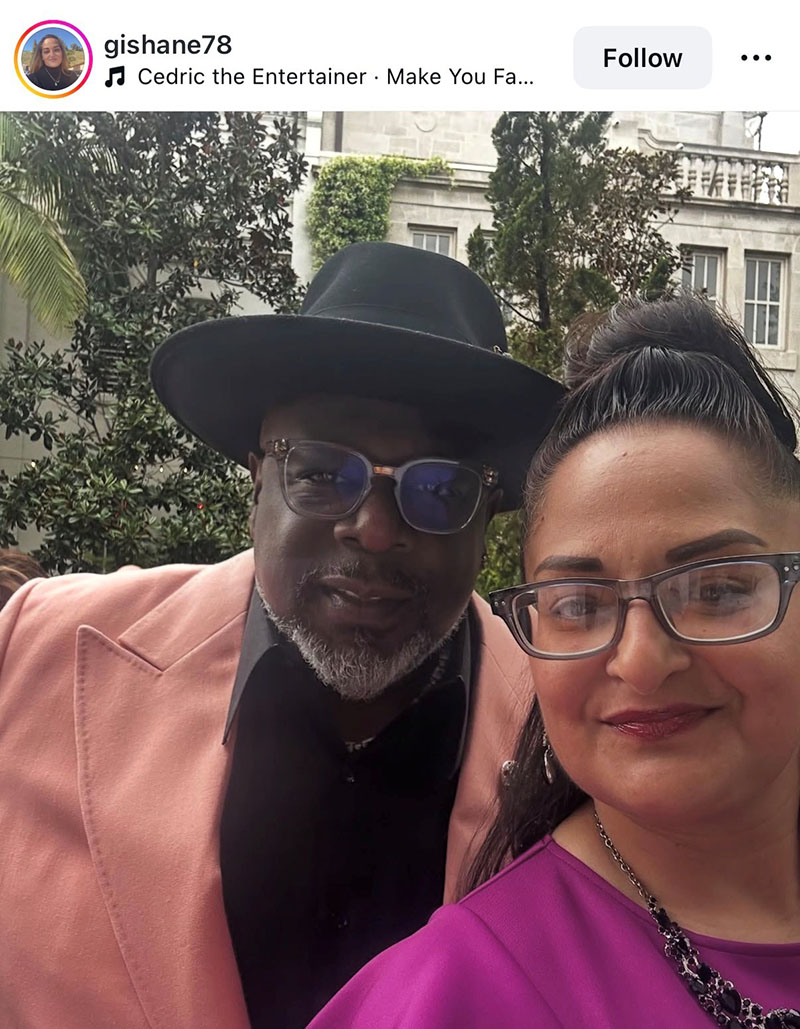
Shanell has created the 8 Second Campaign: a movement where patient advocates and celebrities like Cedric the Entertainer have recorded 8-second videos for social media, amplifying Emmitt’s story and calling on others to learn more about becoming a kidney donor. You can follow and contact Emmitt and Shanell on Instagram @malelupuswarriors1 and @gishane78
Since his diagnosis, lupus has ravaged Emmitt’s body in a multitude of ways, attacking organs, disrupting vital systems, rewriting the routes his blood once traveled. But today, the marks left behind reveal a story of perseverance. Visible on his physique are the faint punctures where dialysis ports were inserted, removed, and replaced as veins failed. They are on both sides of his chest, both sides of his neck, his groin, and his abdomen where doctors attempted peritoneal dialysis.
There are the fistulas that surgeons created in his arm when access points collapsed. Eventually, doctors performed a drastic bypass procedure, relocating his basilic vein from beneath his arm to the top of it so he could continue dialysis.
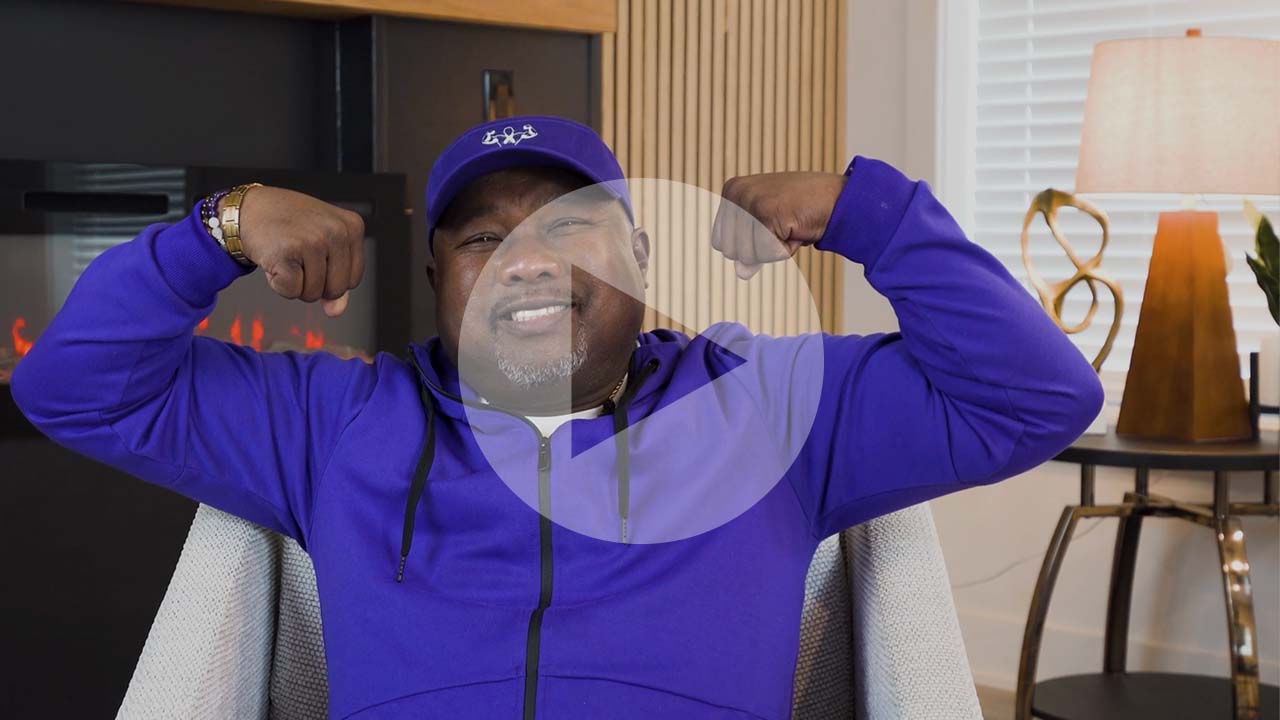
Today, from the ongoing damage caused by lupus, Emmitt is in desperate need of a kidney— what would be his second transplant. In response, Shanell has created the 8 Second Campaign: a movement where patient advocates and celebrities like Cedric the Entertainer have recorded 8-second videos for social media, amplifying Emmitt’s story and calling on others to learn more about becoming a kidney donor.
Having been on the transplant list since 2022, Emmitt’s need grows more urgent by the minute. Yet even in the throes of end-stage kidney disease, he remains unflappable.
“Closed mouths don’t get fed,” he says with a knowing smile. “It’s been a tough road. This disease ain’t going nowhere, but neither am I.”
Emmitt runs his finger slowly along his arm, tracing the places where veins once rose beneath his skin…veins that years of dialysis and long-term steroid use have worn away. But when he looks at his body, he doesn’t see ruin. He sees survival – a living record of every battle fought and every road rerouted.
Today, Emmitt stands in the gap for men living with lupus who have been overlooked, misunderstood or too afraid to speak. And when he smiles—that wide, signature smile that lights up the entirety of every space he fills—you begin to understand that lupus may have rewritten the map of his life, but in so doing, it revealed the true north of a warrior born to blaze the trail.
This story reflects the personal experience of an individual living with lupus. The views and experiences expressed are their own. Nkarta shares patient stories to raise awareness and does not provide medical advice or endorse any specific treatment or individual course of care. The individual received compensation from Nkarta for their participation in this story, which was developed in collaboration with Nkarta. Individuals should consult qualified healthcare professionals for medical guidance.