
The Immunosuppressants Prescribed to Help This Lupus Patient Almost Killed Her
Rekha’s physical and mental health rekindled by acts of self-care and a community of kindred spirits
Rehka

Rekha still remembers the moment her face began to swell. It started as a small spot on her lip, casually dismissed by a doctor as a mosquito bite. But within weeks, her upper lip blew up “as big as a tomato” and painful ulcers erupted across her scalp, ears, nose and mouth.
Soon, they rushed her to the intensive care unit, where she remained for a week so physicians could stabilize her freefall. At 19, Rekha was unraveling in ways no medical professional could initially explain.
Unlike many autoimmune patients whose symptoms unfold gradually, Rekha’s arrived like a storm. Weeks before her admission, she returned from a family visit in India feeling exhausted and overheated, her fatigue so heavy it felt like gravity had doubled. When her fever finally lifted, she briefly exhaled. But her body was already signaling something more serious.
Because of her swollen lips, doctors initially suspected herpes, a diagnosis that collapsed when the tests came back negative. What followed instead was a constellation of classic lupus markers, including a butterfly rash and positive antinuclear antibody (ANA) test revealing that her immune system had turned on her.
The official diagnosis came back: systemic lupus erythematosus, a chronic autoimmune disease capable of attacking nearly every part of the body — organs, tissue, blood, and cells—with little warning and no clear cause.
In the months that followed, Rekha tried to reclaim a measure of control over the physical changes. She used makeup to hide the scars left behind by the ulcers. When her thick hair began falling out, she cut it short, but then shingles appeared soon after.
To suppress her disease, doctors placed her on high doses of prednisone. The medication helped control the inflammation, but it brought its own visible changes.
“There was the moon face and everything,” Rekha recalls. “It was very visible physically that there was something going on.”
Fatigue became a constant in her life. Looking back, lupus had been whispering its presence during her freshman year of college when she would fall asleep in the library or in class without warning. “I was sleeping all the time,” she says. “I couldn’t keep my eyes open.”
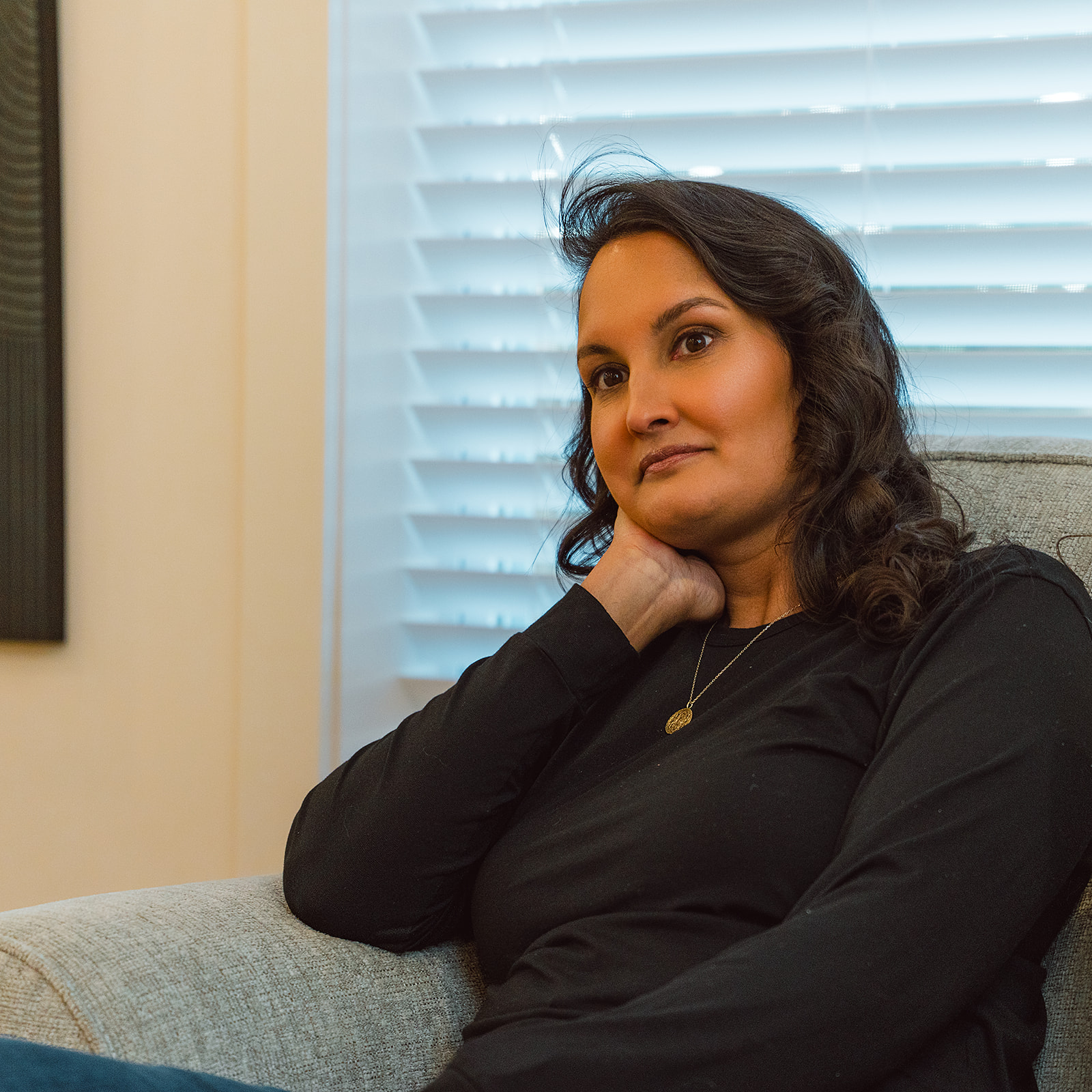
Unlike many autoimmune patients whose symptoms unfold gradually, Rekha’s arrived like a storm. Weeks before her admission to the ICU, she returned from a family visit in India feeling exhausted and overheated, her fatigue so heavy it felt like gravity had doubled. When her fever finally lifted, she briefly exhaled. But her body was already signaling something more serious.
Yet the hardest part wasn’t just the physical toll; it was the isolation. For years Rekha struggled to accept her diagnosis, often keeping it quiet even among friends. Many people in her life didn’t understand, or worse, mistakenly attributed it to her lifestyle choices.
She kept hearing the same painful suggestions: eat better, try harder, maybe it’s the medication. The implication was clear: If she simply took better care of herself, perhaps the disease would disappear. But lupus doesn’t work that way.
“It took a long time for people to understand that this wasn’t something I caused,” she says.
Silence felt easier. Explaining her flares and multisymptomatic condition to others often fell on deaf ears. So, for nearly two decades, Rekha walked her disease journey largely on her own. “For the first 20 years, I didn’t realize there was a whole lupus community,” she says. “It was me and my doctor.”
In the wilderness, she cycled through a litany of medications that either failed immediately or offered but fleeting relief. Steroids became the cornerstone of her survival. She stayed on prednisone for 21 years, sometimes at ultraheavy doses. The long-term cost was steep. Walking became painful at first – and eventually, nearly impossible. In 2011, she developed avascular necrosis in both hips and needed a hip replacement.
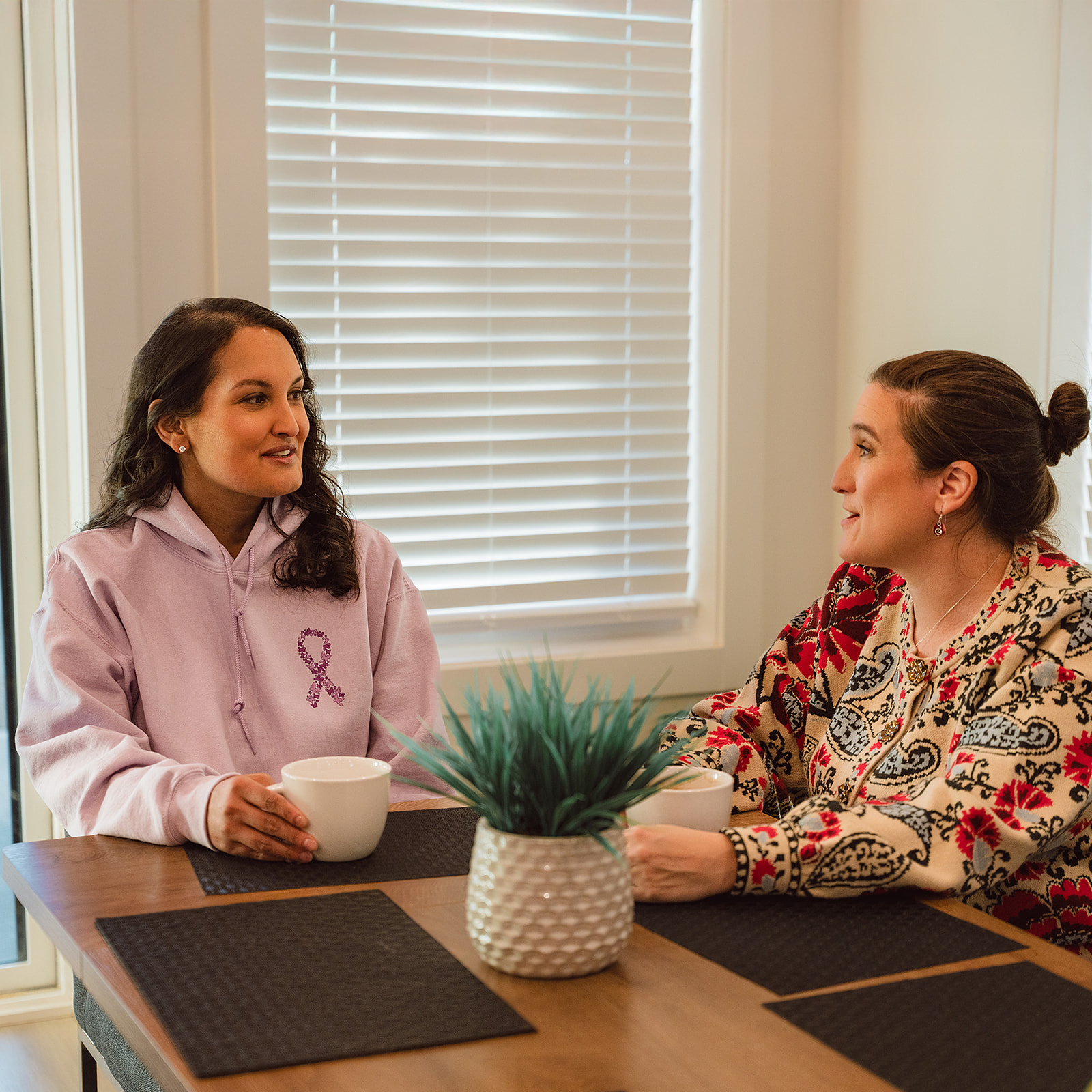
Rekha became to her fellow travelers in the lupus community the friend and resource she wished she had when diagnosed as a teen. Today, she helps newly diagnosed patients consider an idea that was hard for her younger self to embrace: that life can still expand living with chronic illness.
After recovering from that surgery, an even more serious health crisis followed. After receiving a commonly used immunosuppressant, she began experiencing alarming symptoms: lockjaw, fevers, chills, diarrhea, night sweats, and weakness so severe she struggled to lift her arms.
Initial emergency room tests found nothing. Doctors told her it would pass. They were wrong. Her symptoms worsened for three months as Rekha lost nearly 40 pounds. In time, doctors discovered the cause: a dangerous cytomegalovirus infection fueled by intense immunosuppression.
“It ended up going into my eye, almost into my brain,” she recalls. Retinal necrosis developed, requiring emergency eye surgery and months of recovery. She learned during that terrifying episode that the treatments meant to help can become life-threatening themselves.
After the necrosis scare, doctors stopped many of Rekha’s medications immediately. When the crisis settled, she was left primarily on a single drug—chloroquine—and was forced to confront hard questions about the future of her health given the cumulative toll immune suppression had taken. What else might help her body heal?
In March 2022, Rekha made a quiet but determined commitment to rebuild her health in different ways. She kept seeing her doctor but she began focusing on daily practices that supported her health holistically: balanced nutrition, more movement and exercise, and greater attention to rest and work-life balance. The impact wasn’t curative, and her lupus remained unpredictable. But the changes made a major cumulative impact on her health.
“My lupus is the best it’s ever been,” she exclaims today, smiling. “All my labs literally went from red to green.” Her lupus nephritis stabilized, and her hair began to grow back.

Still, Rekha is careful not to present her lifestyle adjustments as some kind of secret formula. “Lupus can flip the table at any time,” she warns. “What works for one person may not work for someone else.”
As her health improved, Rekha finally found a community of people who understood her plight. During the isolation of the COVID pandemic, she began spending more time online and eventually found other people living with lupus and chronic illness on Instagram. “It was the first time I realized there were so many of us,” she said.
Rekha soon created her own Insta page (@LivingLupus) and used it to help build a supportive space where patients can share experiences, resources, and encouragement. In doing so, she became to her fellow travelers in the lupus community the friend and resource she wished she had when diagnosed as a teen.
Today, Rekha helps newly diagnosed patients consider an idea that was hard for her younger self to embrace: that life can still expand living with chronic illness.
“It is possible to go from struggle to something that’s better,” she tells others as she recounts her long journey to better physical and mental health.
Online, she noticed one topic kept resurfacing: motherhood. Like many women with lupus, Rekha is wistful about the topic of motherhood. Earlier in her adulthood, she was diagnosed with pulmonary arterial hypertension, a complication affecting the heart and lungs that made pregnancy unsafe.
She spent so much of her life trying to survive that the topic of starting a family seemed out of reach. But today she and her husband have built a different kind of family in the younger lupus patients she helps, for whom she has become a confidante and caring big sister.
Rekha’s story traces a long, uneven path through illness, stigma, survival, and ultimately, connection. By making small but impactful lifestyle changes and by embracing community, she is helping to dismantle the onerous myth that active autoimmune disease is somehow a personal failing. Her journey has taught her valuable lessons she now imparts to others: Healing is rarely linear, and no one should have to walk this perilous path alone.
This story reflects the personal experience of an individual living with systemic lupus erythematosus. The views and experiences expressed are their own. Nkarta shares patient stories to raise awareness and does not provide medical advice or endorse any specific treatment or individual course of care. The individual received compensation from Nkarta for their participation in this story, which was developed in collaboration with Nkarta. Individuals should consult qualified healthcare professionals for medical guidance.