
Staring Down Myositis and Kidney Cancer Help an Alabama Neurologist Reach the Mountaintop
Love and Community Fuel Stephen’s Harrowing Survival Story
Stephen
Before sunrise, Stephen sat alone in the darkened living room, the glow of his phone illuminating his face while the rest of the house slept. Outside, the humid June air hung heavy over Lake Martin, unnervingly quiet in the strange silence of an early COVID summer. No boats skimmed the water, and no hum of vacation traffic drifted in from the highway.
Stephen had been anticipating the MRI results for days, unable to banish the dread building inside. When the notification appeared in his patient portal, he didn’t wait for a doctor’s call. He is, after all, a neuroscientist.
Scanning the report, he felt his body tighten as his eyes locked on those three terrifying words: renal cell carcinoma.
The diagnosis didn’t fully register in that moment. He reread the sentence again and again, as though repetition might soften the fact that his devastating autoimmune disease had now brought cancer to his doorstep – bringing to fruition a fear that had haunted him for years. He stood up slowly from the darkness of his living room and walked into the bedroom, gently waking his fiancé at 4:17 A.M, an ungodly hour to deliver the news.
“Shaylee,” he whispered, tears sliding down his face. “I have kidney cancer.”
There are moments in life when time fractures into two pieces: before and after. For Stephen and Shaylee, 4:17 A.M. heralded the after.
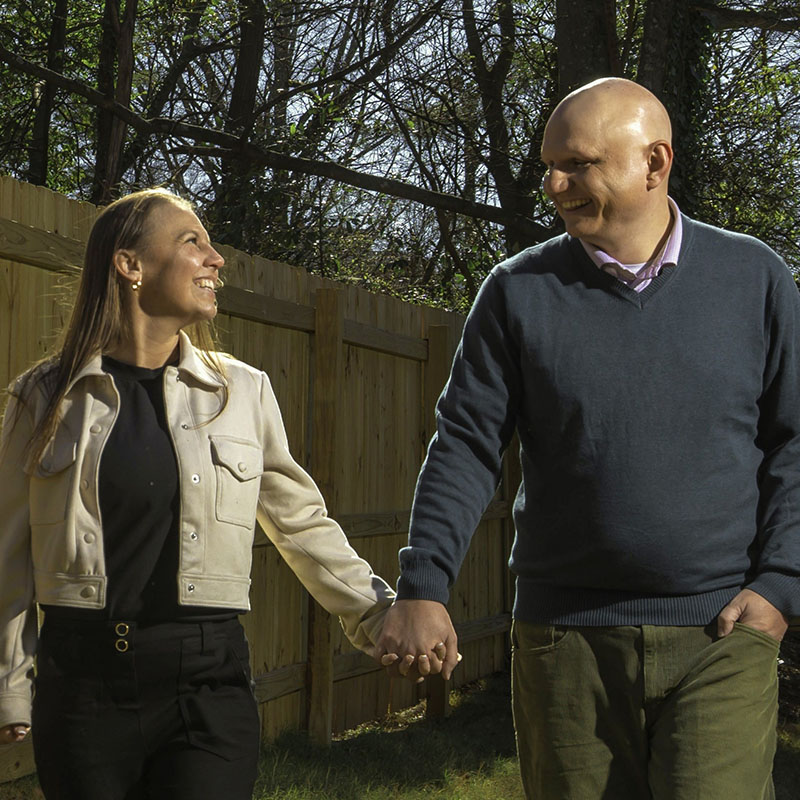
Few words were spoken as they walked hand in hand down to the dock and stared out at the pale horizon, tormented by the fickle nature of mortality. Eventually, Stephen broke the silence.
“We’re going to stay positive,” he said, his voice trembling before steadying as he spoke. “We’re going to tackle it head on.”
Stephen and Shaylee made a promise to each other on that dock. If they survived this, they would live with urgency, gathering rosebuds rather than waiting for the perfect timing in this finite journey called life. The future was frightening and uncertain to contemplate, but they would not face it alone.
Stephen did what came natural to him when wrestling with uncertainty; he threw himself into his work. He already knew what it was like to adjust to a devastating diagnosis as someone living with dermatomyositis for years. He began methodically consuming PubMed studies late into the night, trying to better understand the scientific links between his rare autoimmune disease and renal cancer.
While he knew dermatomyositis carried an elevated cancer risk, being cognizant of a health risk is different than watching it materialize inside you. The question of what if? is esoteric; the question of what now? is primal.
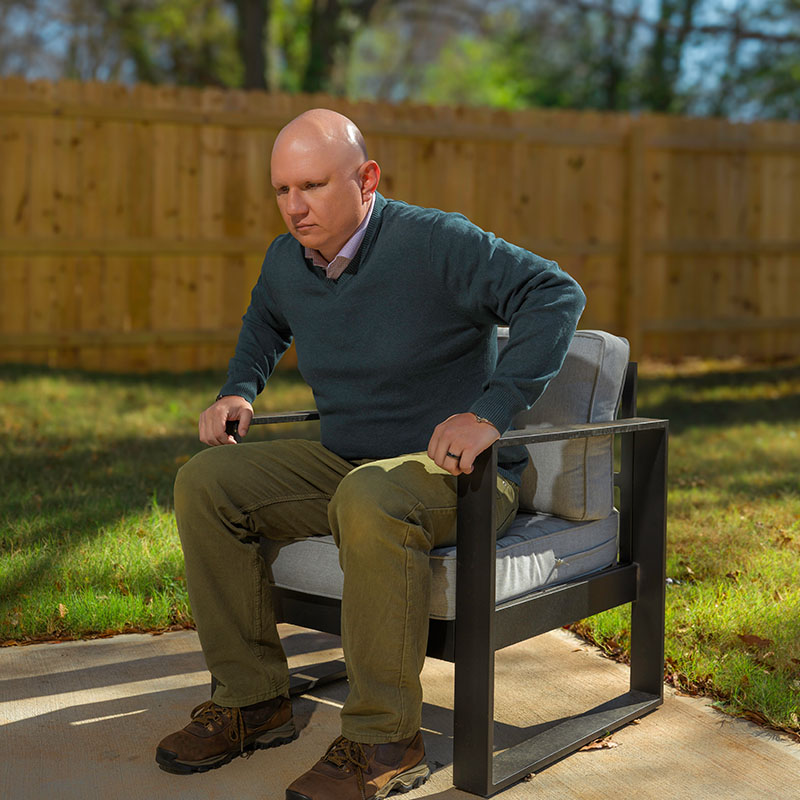
In the midst of juggling serious symptoms and side effects from his autoimmune disease, the MRI result landed in his patient portal in the dead of night with a second devastating diagnosis: renal cell carcinoma. Through it all, Shaylee remained steadfast. There were nights when pain shot through his legs like electricity, making sleep impossible. Without needing to be asked, Shaylee would massage his muscles until the spasms eased. In hospital rooms, she would learn the rhythms of IV pumps, medication schedules, lab reports and oxygen monitors. Stephen calls her his rock.
Before the cancer came, Stephen’s body had been quietly signaling distress for a long time. Growing up in Birmingham, Alabama, he was a disciplined athlete and student. He played football and basketball, lifted weights, and pushed his body’s limits. But while he looked healthy and strong, there were moments when his body betrayed him in ways he couldn’t explain.
One day in the weight room he attempted a squat that should have been routine; instead, he suddenly collapsed beneath the bar. “All the players and coaches around me were like, ‘What just happened? Why are you collapsing?” They thought I had just given up trying to lift the weight,” he says.
Other days at school, exhaustion would swallow him; he would go home and sleep for hours, awakening at midnight to finish his homework. “I would come home unbelievably fatigued and go straight to bed,” he explains. Stephen blamed himself. Overtraining. Poor discipline. Bad stress management. Chronic disease was never considered.
At 18, angry rashes bloomed across his skin. A dermatologist said it was eczema, and prescribed corticosteroids. The rash faded, but Stephen’s body kept speaking up.
By his early 20s, the fatigue had sharpened into something more difficult to endure. He was taking Advil every four hours just to function. His lost hair and weight, and inflamed rashes started spreading across his knuckles and hands. Then one day, he vomited blood.
At the student health center, despite the constellation of symptoms orbiting his body, the doctor focus on his swollen hand. They ordered an X-ray, as if he had punched something. At that moment, Stephen realized he would need to take ownership of his care henceforth and fight for himself.
At the time of his dermatomyositis diagnosis, he was already deep into his PhD training as a neuroscientist. He was fascinated by the mysteries of the brain, never imagining the health mysteries of his own body he would have to solve. Illness has a way of collapsing the distance between scientist and subject. “My true expertise in dermatomyositis comes from living with it,” he says.
He learned the language of his changing body and how to spot the warning signs of an approaching flare before lab tests were run to confirm them. He learned that fatigue was a harbinger of profound muscle weakness, rashes signaled inflammation raging beneath the skin, and unchecked disease could threaten connective tissues in his lungs and heart.
When Stepen was hospitalized, physicians often admitted their ignorance about dermatomyositis. He, the patient, would often end up educating the doctors on the right medications and dosing to treat severe flares and on which symptoms required the most urgent attention.
Self-advocacy became a survival instinct. While symptoms were challenging, the treatments were sometimes even worse. Corticosteroids could quickly calm inflammation but at a cost: Bone density loss. Weight gain. Cataracts. Elevated blood pressure. And increased diabetes risk.
“When these medications are introduced to your system, it’s not targeting the cells that are doing the destruction,” he explains. “It’s just kind of a systematic depletion… trying to completely wipe out a part of your immune system.”
The irony was difficult to escape: The medications protecting his body also left it vulnerable. Currently available biologics and IVIG offered some improvement, but both fell far short of a cure. Then, in the midst of trying to juggle so many variables, symptoms and side effects, cancer reared its ugly head.
Through it all, Shaylee remained steadfast. She met Stephen shortly before his myositis diagnosis so never really knew Stephen without illness. He calls her his rock. There are nights when pain shoots through his legs like electricity, making sleep impossible. Without needing to be asked, Shaylee massages his muscles until the spasms ease. In hospital rooms, she learned the rhythms of IV pumps, medication schedules, lab reports and oxygen monitors.
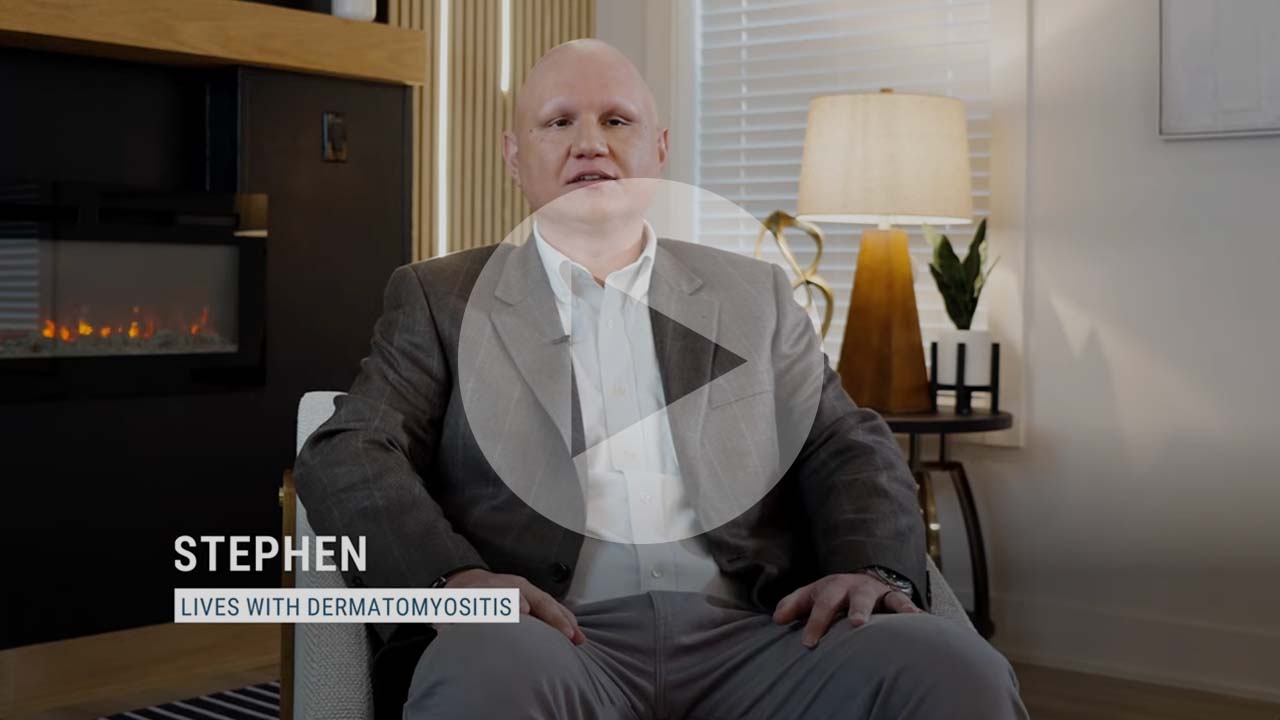
Stephen continues to remain hopeful. For him, emerging therapies represent more than the march of science. They represent the possibility of reclaiming a measure of autonomy from days filled with endless compromise. “When there are new clinical trials and new therapies, it reminds us that we’re not alone in this fight,” he says.
The first oncologist they met advised against surgery. Stephen was severely immunocompromised, and COVID cases were surging. The risks felt too high. They were told to wait. But waiting with cancer felt dangerous, so they searched for another opinion and eventually found a surgeon to perform a partial nephrectomy. Before the surgery, Stephen and Shaylee made a list – not extravagant destinations or bucket-list adventures, but small Alabama places they had always meant to visit but had never made the time.
That summer, they embarked on a journey filled with scenic overlooks, hidden landmarks and tiny roadside stops, exploring all manner of quiet corners in the state they loved.
When August arrived, COVID restrictions meant most patients entered hospitals alone. But because Stephen worked for the university, an exception was granted. Shaylee filmed him before surgery, giving a shaky thumbs up from the hospital bed. Later, she climbed into bed beside him during recovery and filmed moments he was too sedated to remember himself.
Afterward, the surgeon delivered the news The grade 2 tumor had been growing faster than expected. It sat only one millimeter from the kidney’s main artery.
“If we had waited,” the surgeon said quietly, “there’s no telling.”
The surgery saved Stephen’s life, but uncertainty lives as well. Stephen and Shaylee still speak honestly about recurrence risk, the impossible math of family planning, and which medications might harm a fetus.
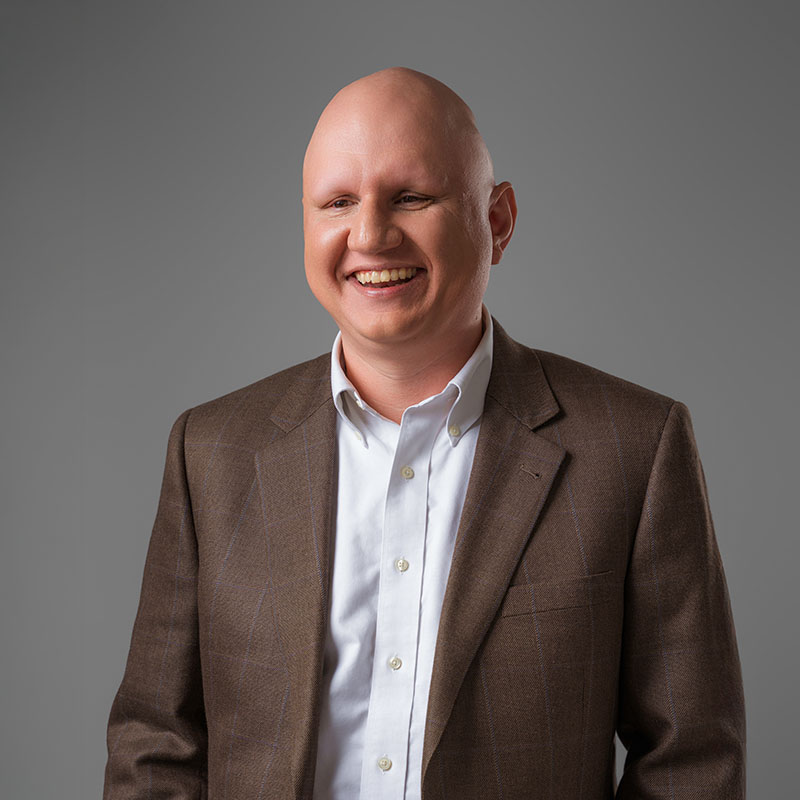
Self-advocacy became a survival instinct. While symptoms were challenging, the treatments were sometimes even worse. Corticosteroids could quickly calm inflammation but at a cost: Bone density loss. Weight gain. Cataracts. Elevated blood pressure. And increased diabetes risk. “When these medications are introduced to your system, it’s not targeting the cells that are doing the destruction,” he explains. “It’s just kind of a systematic depletion… trying to completely wipe out a part of your immune system.”
Would Stephen be strong enough to raise a child or endure the sleepless night wrought by a crying baby? Would he be able to throw a football in the backyard to his kid?
Stephen continues to remain hopeful. For him, emerging therapies represent more than the march of science. They represent the possibility of reclaiming a measure of autonomy from days filled with endless compromise. “When there are new clinical trials and new therapies, it reminds us that we’re not alone in this fight,” he says.
Recent conversations in the myositis community about next-generation cell therapies have changed the way Stephen has imagined his future. He now finds himself thinking less about the boundaries imposed by his illness and more about what new possibilities may lie ahead.
That perspective shift brought him back to the fire tower atop Smith Mountain. Built in 1939 and rising 90 feet above Lake Martin, the structure stands like a sentinel over the Alabama landscape. From the shoreline below, Stephen could see its silhouette against the sky. Long before he ever climbed it, the idea of making it up that mountain took on symbolic import. Early on, he attempted the hike and failed. The steep incline and nine flights of metal stairs demanded more strength than his myositis-riddled body could muster.
But after Stephen dispatched the cancer from his kidneys, he and Shaylee shared their ambition to climb Smith Mountain with followers on their YouTube channel. Someone from the Cherokee Ridge Alpine Trail Association saw it and reached out with an offer of help. He unlocked a park gate and drove them by pickup truck up to an access road to the tower’s base.
“If you can get me to the bottom,” Stephen promised, “I’ll give every ounce of energy I have to make it to the top.”
Slowly, platform by platform, the couple climbed. The higher he and Shaylee ascended, the wider the landscape stretched beneath. At the halfway point, the wind gusts grew in intensity, sending adrenaline rushing through their bodies as they climbed well above tree line. Stephen steadied his breathing and heart rate, his beloved by his side.
Finally, as they neared the final flights of stairs, a sudden whoosh was followed by a high-pitched whistle echoing through the air. To their amazement, just 20 feet in front of them, a bald eagle soared into the open sky.
High above the mountain, they stood silently together as they had on the dock, and in that moment, Stephen understood something no lab result could ever convey: No one survives alone. Holding on to life is less an act of individual strength than a collective accomplishment made possible by partners, doctors, researchers, friends, family and strangers giving you the courage to scale mountains.
This story reflects the personal experience of an individual living with dermatomyositis. The views and experiences expressed are their own. Nkarta shares patient stories to raise awareness and does not provide medical advice or endorse any specific treatment or individual course of care. The individual received compensation from Nkarta for their participation in this story, which was developed in collaboration with Nkarta. Individuals should consult qualified healthcare professionals for medical guidance.