
Dermatomyositis Took Her Old Life, But It Couldn’t Conquer Her Spirit
A disease that ravages muscle and skin made Melissa stronger and her skin thicker
Melissa
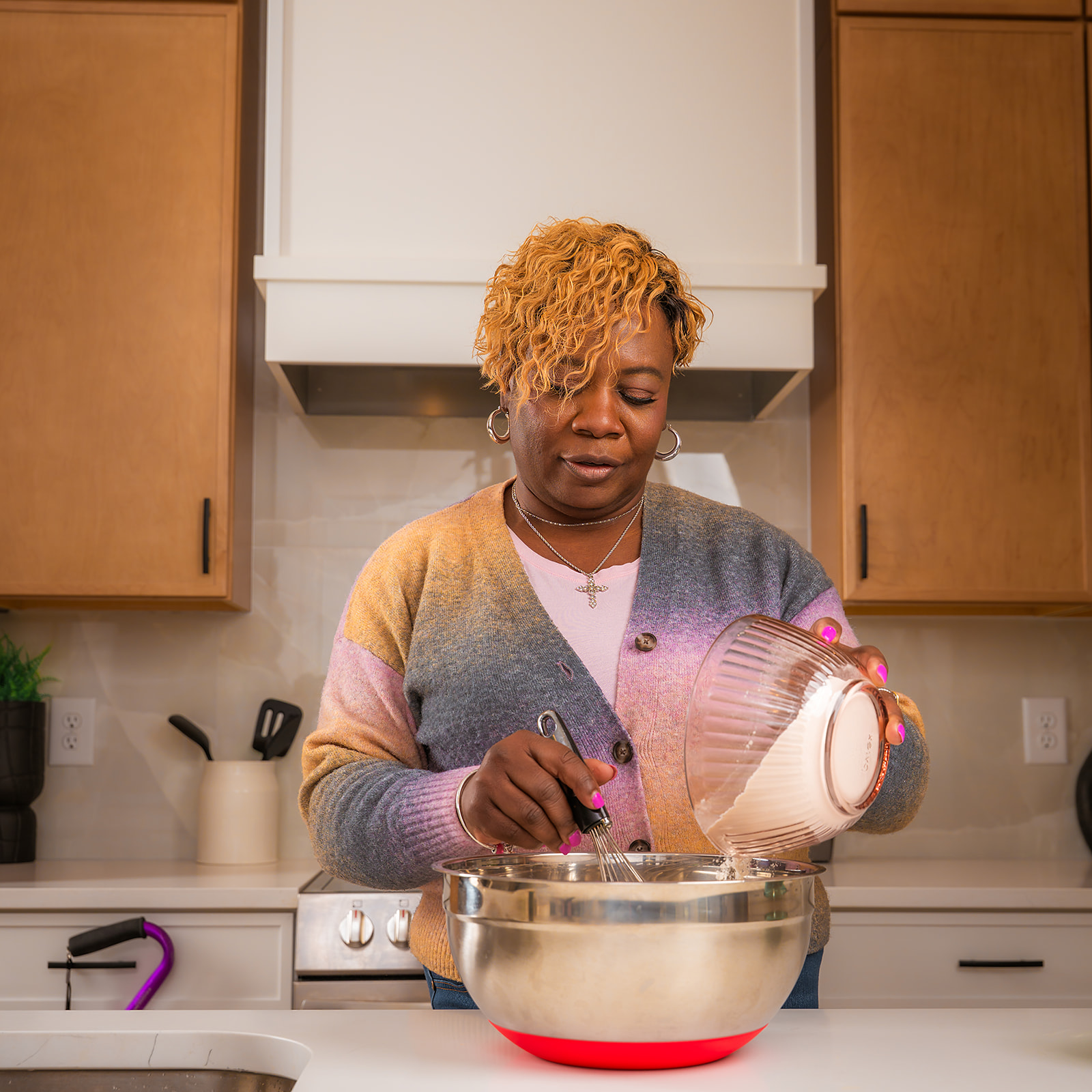
Step into Melissa’s kitchen in Augusta, Georgia, and you’re instantly transported to a Southern home. Butter softens in a mixing bowl, brown sugar clings stubbornly to a wooden spoon, and a lightly greased tray rests on the counter on the kind of delightfully ordinary afternoon Melissa no longer takes for granted.
She laughs as she hooks her cane onto a cupboard handle, a device for standing she has renamed “my kitchen assistant.” She steadies herself, shifts her weight and keeps moving with more measured, intentional steps.
Baking has always been Melissa’s love language. Even now, with all that has changed, she insists on remaining fluent. She just speaks it differently: a chair pulled up when standing becomes too much, breaks between steps and wizened humor folded into the batter with the chocolate chips. Joy measured against fresh limitations is the recipe her life follows today.
Melissa’s diagnosis began like many autoimmune stories do, with endless lab work, unanswered questions and long hours in waiting rooms. When her primary care doctor discovered elevated CK muscle enzymes and positive antinuclear antibody (ANA) results, she was referred to rheumatology and placed in medical limbo, waiting for a specialist who could offer answers.
But her disease wouldn’t wait. “One day I woke up,” Melissa recalls, “and I couldn’t get out of bed.”
In 2020, Melissa was diagnosed with dermatomyositis, a rare autoimmune disease that causes severe skin rashes and progressive muscle weakness.
“It’s hard for me to get up from seated positions and climb stairs,” Melissa explains, describing how she has gradually had to adjust to the loss of strength and muscle tone. Looking back now, she can see the early warning signs more clearly. Her first symptom was a rash spreading across her chest. A dermatologist dismissed it as simple dermatitis and sent her home with ointment. But Melissa felt something deeper happening in her body: a fatigue that didn’t ease after rest and weakness that turned ordinary tasks into impossible ones.
Soon, standing too long became difficult and bending down became risky. Eventually even something as simple as showering meant sitting on the edge of the tub, because standing under the water simply felt unsafe.

Melissa realized that living with dermatomyositis meant confronting the limitations of current treatments. Available immunosuppressants and steroids could help manage symptoms “to the point where you can have some form of quality of life.” Then again, Melissa quickly clarified: “None of the treatments actually resolve your symptoms.”
Before dermatomyositis, Melissa’s days were full and fast, like a bustling kitchen during the holidays: work, motherhood, errands, meals and laughter. Everything had its rhythm.
She worked as an ER registration clerk, a job that demanded stamina, quick thinking and the ability to remain steady in moments of chaos. When she returned home, she stepped naturally into another rewarding role: mother to a toddler who loved trips to the park and playing on the floor.
And when she could find spare time, Melissa baked. She baked for joy and comfort and because it was the way she showed family and friends they’re loved.
But with dermatomyositis, every area of her life changed. Melissa’s muscle weakness became so severe it reached into motherhood in a way that still hurts to talk about.
Play with her daughter became a recollection. The loss wasn’t theoretical; it was constant, intimate and impossible to ignore.
“She was too heavy,” Melissa says. “I was just that weak. I couldn’t even hold my daughter anymore. I could barely hold a glass of water.”
Exercise also vanished from her life. And for a time, so did baking, the one thing that had always steadied her. She could no longer stand long enough to see a recipe through. Finally, she lost her career.
“I became disabled in 2020,” Melissa explains. “I haven’t been able to work since.”
She speaks with unflinching honesty about what that kind of loss does to a person.
“Dermatomyositis is not only a physical disability,” she describes. “It also attacks your mental ability.” Depression followed as more of her daily life slipped out of reach. Her emotions transcended sadness. She felt grief – the loss of being an independent woman who supported her family.
“I couldn’t bathe myself. I couldn’t drive anymore. I couldn’t be the mom and wife I was used to being. And I couldn’t work,” she reflects.
At times, even walking became uncertain. “One day I was walking and I just fell,” recalls Melissa. “I had no control over it… it’s like my body shut down.”
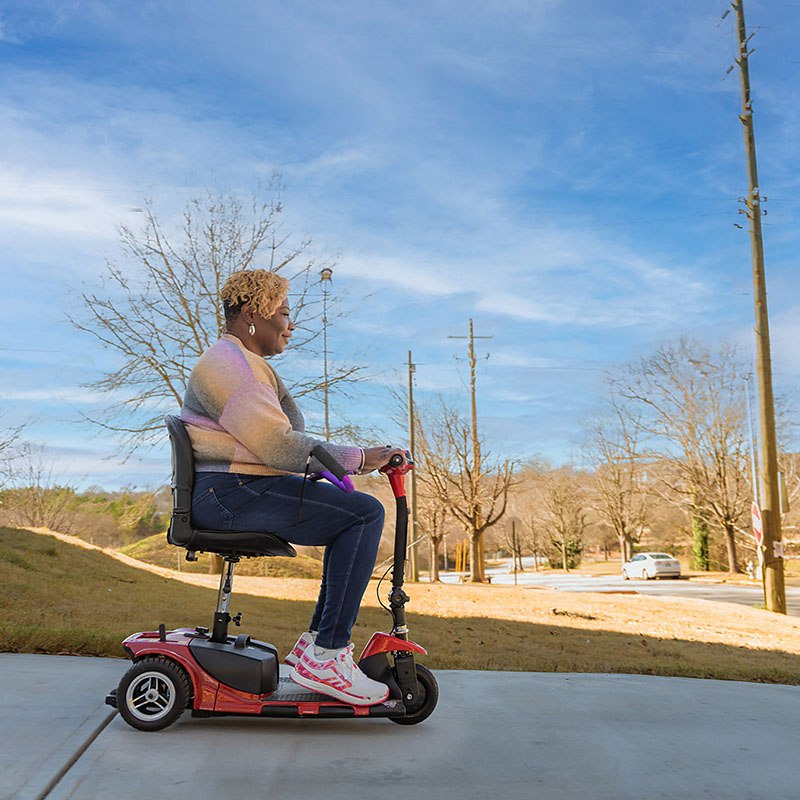
Eventually, a scooter became necessary, especially for long distances like hospital parking lots and lengthy doctor visits. Later, physical therapy helped her regain enough strength to transition to a cane, though the fear of falling never completely disappeared.
Treatment, she learned, was less about curing the disease and more about rebuilding a life that could still hold meaning.
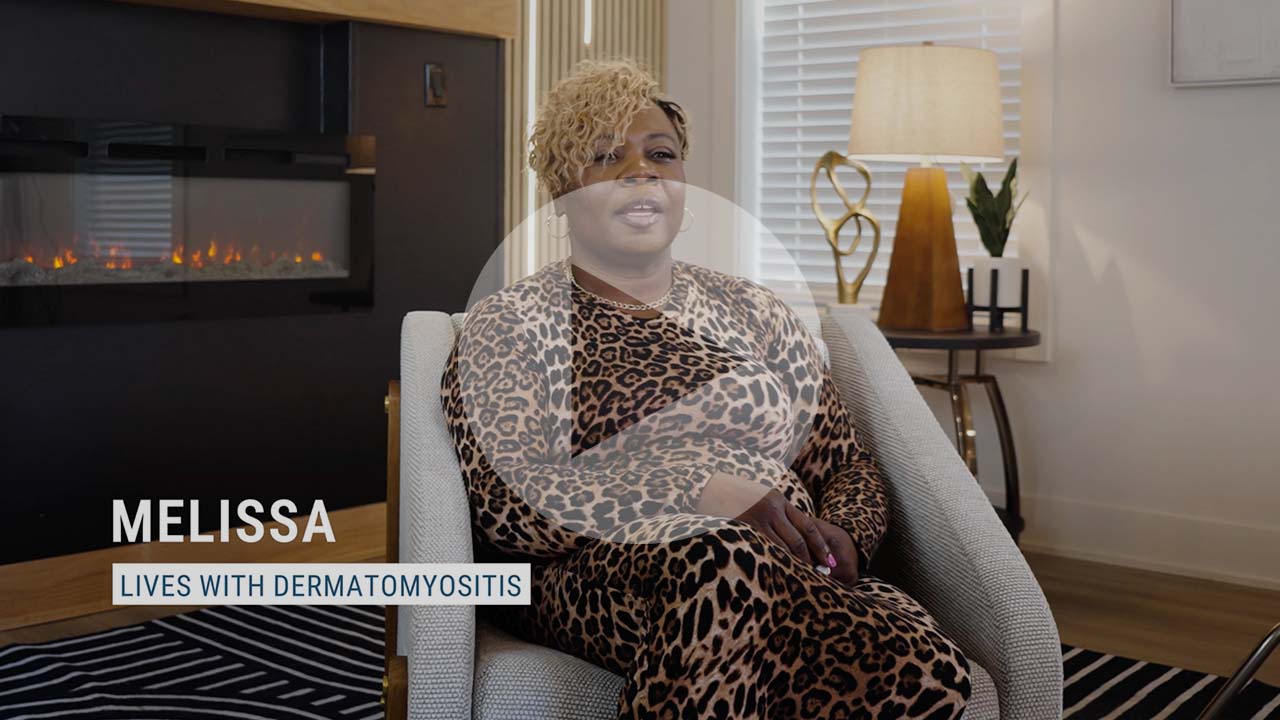
Melissa is passionate about supporting clinical trials. In her view, the stakes are urgent and deeply personal. “We don’t have any drugs out here that really treat this condition, and right now it’s incurable. If you want to define your quality of life, go out there and make that definition for our condition” she urges her fellow myositis patients.
Throughout her treatment journey, Melissa tested positive for the MI-2 antibody, which often responds well to steroids, prompting doctors to begin high-dose prednisone. In the years since, she has moved through a long list of therapies—methotrexate, hydroxychloroquine, IVIG—and now takes tocilizumab.
While certain treatments have temporarily eased specific challenges, Melissa realized living with dermatomyositis also meant confronting the limitations of current treatments. Available immunosuppressants and steroids help manage symptoms, Melissa explains, “to the point where you can have some form of quality of life.” But, she adds candidly, “None of the treatments actually resolve your symptoms.”
While medications helped manage her disease, no pill or injection could treat the loneliness she felt. Even with the constant support of her loving husband, Melissa often felt unseen in a world that couldn’t truly understand what she was fighting.
The only balm for that affliction was community. Melissa joined an online support group called MSU for people living with myositis; the group was a lifesaver.
“I encourage anybody that’s newly diagnosed to get involved in a support group,” she exclaims. “They understand what you’re going through and will definitely be the support you need.”
They helped her navigate moments that once felt unbearable, reminding her that “even though it’s bad right now, it gets better. You can live with this condition.”
Slowly, Melissa began rebuilding her identity. “You mourn the life that you used to live,” she admits. “So now you have to recreate yourself.
Advocacy became her way of stepping back into the world: to be seen, heard and help others navigating the same path.
Today, Melissa is passionate about supporting clinical trials. In her view, the stakes are urgent and deeply personal.
Back in her kitchen, heat lingers from the oven as cookies cool on the counter. Friends draw closer in sweet-smelling anticipation as Melissa taps the counter with her spatula. “Welcome to cookie church!” she roars with laughter.
“We don’t have any drugs out here that really treat this condition,” she explains. “And right now it’s incurable. If you want to define your quality of life, you go out there and make that definition for our condition.”
While medication and community started to bring some stability back into Melissa’s life, in 2023 she was reminded how painfully unfair life can be. Her husband – the man who had stood beside her through hospital visits, treatments and the hardest days of her illness – passed away.
“I miss that support, and I definitely do this in his memory,” she says softly. Her older daughter stepped in with unwavering support. Parenting now looks different: board games, reading together and coloring at the table.
She has also found support navigating the healthcare system. Through The Myositis Association’s Women of Color affinity group, she has connected with many others who share similar experiences of being dismissed, gaslit or treated as if they were exaggerating their symptoms.
“It’s very difficult to be heard and to be seen by the medical profession,” she says.
She also points to a practical problem that has brought a unique set of challenges: Skin symptoms are often harder to recognize on darker complexions.
“There is not enough representation for us,” she says, calling for greater equity and inclusion in future myositis research and care.
Through it all, Melissa is clear about what living with dermatomyositis has taught her: humility, emotional honesty and the courage to begin again “It’s okay to be weak at times,” she says. “Just don’t stay there.”
Back in her kitchen, heat still lingers from the oven as cookies cool on the counter. Friends draw closer in sweet-smelling anticipation as Melissa taps the counter with her spatula. “Welcome to cookie church!” she roars with laughter.
She isn’t pretending the disease is gone. She’s simply refusing to let it take everything. “Can you help me with the plates?” Melissa asks, gesturing toward the cupboard with a smile. “Even superhumans need help.”
This story reflects the personal experience of an individual living with dermatomyositis. The views and experiences expressed are their own. Nkarta shares patient stories to raise awareness and does not provide medical advice or endorse any specific treatment or individual course of care. The individual received compensation from Nkarta for their participation in this story, which was developed in collaboration with Nkarta. Individuals should consult qualified healthcare professionals for medical guidance.